All 10 Specialized Concrete Calculators
Real formulas, unit conversions, and NYC price benchmarks for every residential and commercial project.
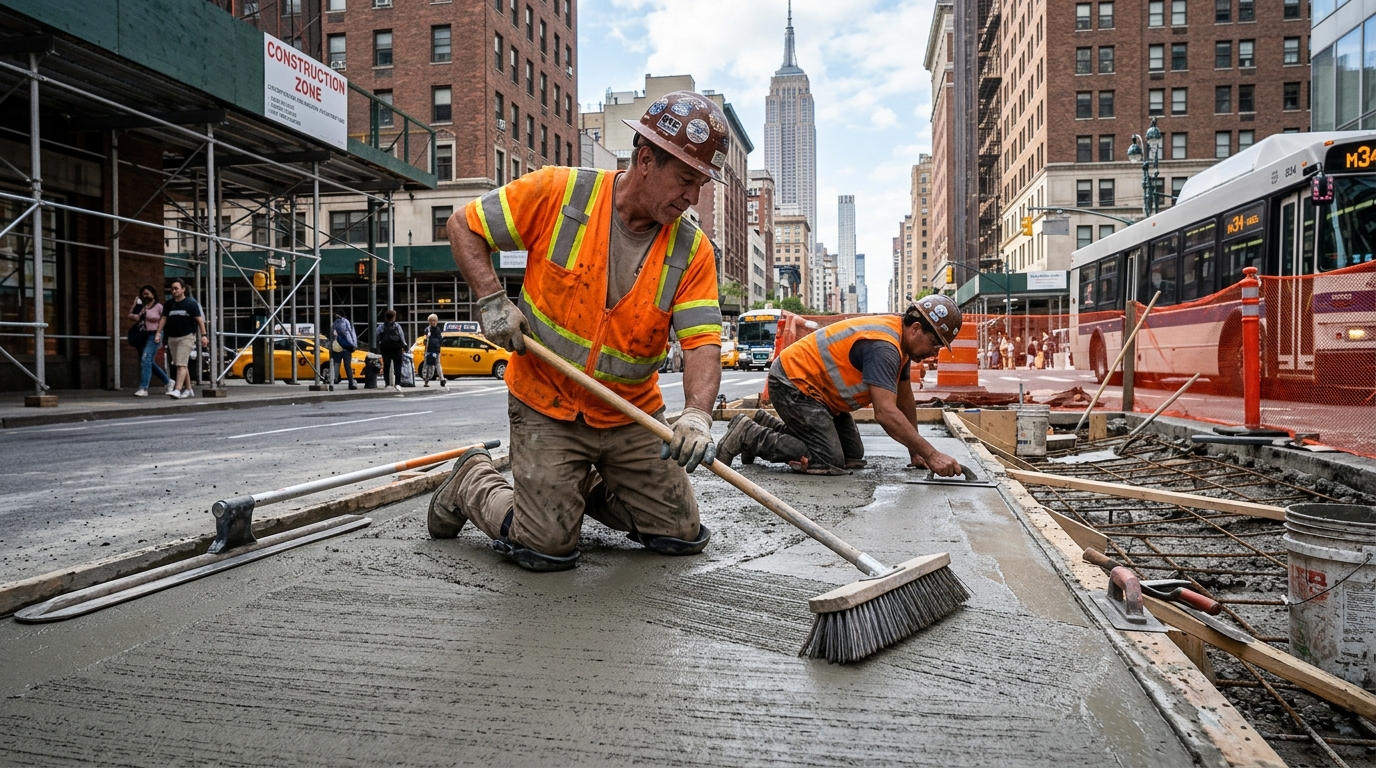
Sidewalk Repair Cost Calculator
Calculate flag replacement, trip hazard grinding, 4-inch pedestrian slab vs 7-inch driveway apron specs, tree root allowances, and DOT permit filing fees to clear sidewalk violation notices.
Calculate Sidewalk Repair →Concrete Volume Calculator
Calculate exact cubic yards, cubic feet, cubic meters, and 60lb/80lb bag counts for slabs and footings with adjustable 0% to 15% waste buffers.
(L × W × D ÷ 12) ÷ 27

Concrete Patio Cost Calculator
Budget for broom, stamped, and exposed aggregate finishes, excavation, gravel base, and rowhouse basement access.
Calculate Patio →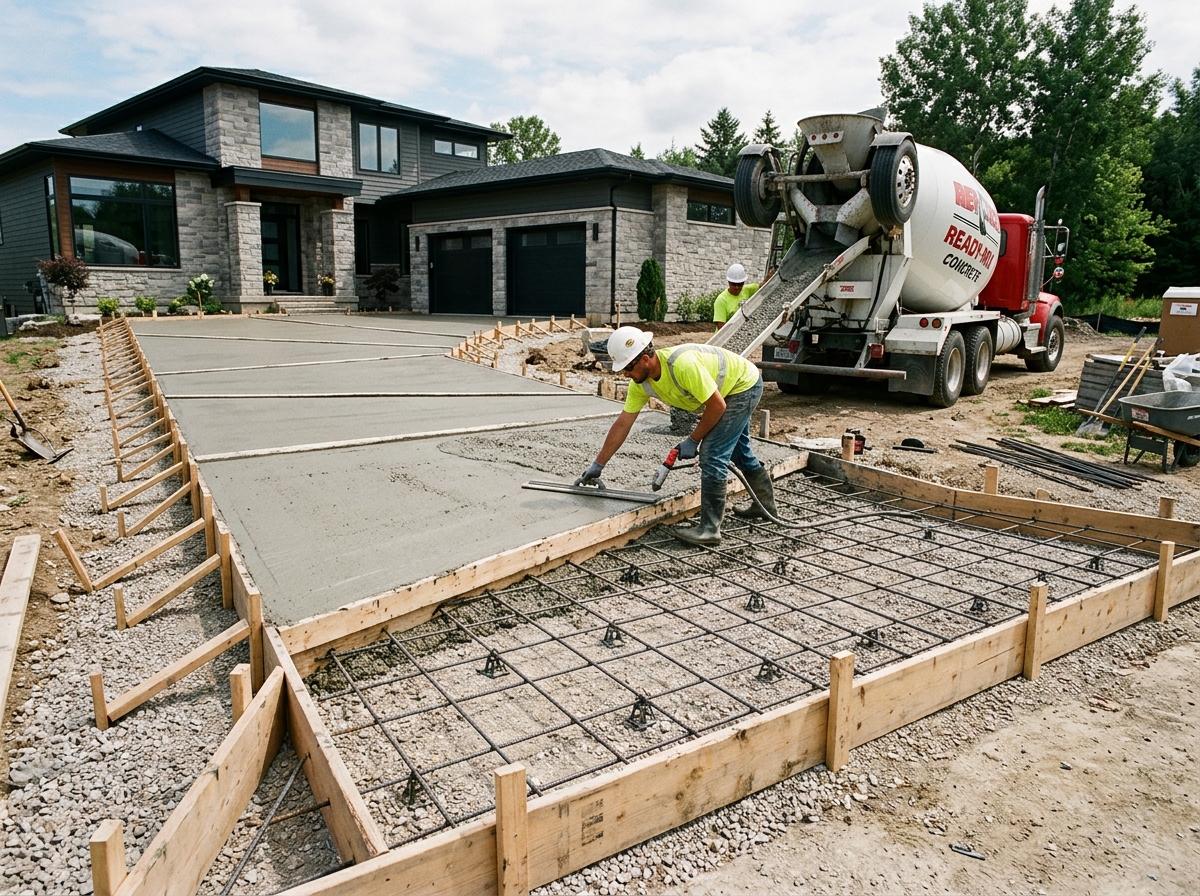
Concrete Driveway Calculator
Size 5-inch and 6-inch reinforced driveways with #4 steel rebar grids, sub-base compaction, and NYC curb cut aprons.
Calculate Driveway →Concrete Cost Calculator
Itemize material, skilled masonry labor, demolition carting, and ready-mix delivery fees with editable NYC benchmark prices.
Concrete Steps Calculator
Exact solid pour volume for stoops, risers, treads, and top landing platforms using prismatic stair formulas.
Calculate Steps →Concrete Thickness Guide & Calculator
Load-based depth benchmarks for sidewalks (4"), driveways (5"-6"), hot tub pads (6"), and 42-inch NYC frost-line footings.
View Thickness Guide →Concrete Mix Calculator
Accurately determine bag counts for 40, 50, 60, and 80 lb bags, water requirements, and truck delivery trade-offs.
Calculate Bags →Concrete Paver Calculator
Calculate interlocking pavers, joint gaps, cutting waste, 1" coarse sand, and 4" crushed stone base requirements.
Calculate Pavers →Concrete Curing Time Guide
Interactive strength milestones for foot traffic (24-48 hrs), vehicle use (7 days), and NYC winter pour protection.
Explore Curing Guide →